
The Federal School Choice Program is Popular
Fresh polling on the Education Freedom Tax Credit

Refer Informed Choice to a friend. If they sign up, you’ll be entered in a drawing for a $100 Amazon gift card. Here is the link:
Measuring public support for different types of school choice is one of the main focuses of our monthly polling. This month, for the first time, we’re releasing results on how Americans and school parents feel about the new federal tax credit for education (the Education Freedom Tax Credit).
While the tax credit isn’t set to launch until 2027, it’s making headlines as states decide whether or not they will participate in this novel approach to school choice next year. Preliminary public opinion is already forming.
These findings come from three monthly waves of EdChoice’s Public Opinion Tracker (in partnership with Morning Consult), spanning from December 2025 to February 2026. You can check out the full report here.
In short, public support looks strong. About 70% of school parents and 60% of American adults support their state participating in the federal tax credit. Notably, opposition is weak, with only 9% of parents and 11% of adults saying they’re against the idea. Most non-supporters are undecided or don’t have a strong opinion either way.
Digging a little deeper, the strongest support comes from high income respondents (73%), MAGA supporters (72%), and Muslims (70%). Other supportive groups include middle income respondents (68%) and conservatives (68%). On the other hand, the weakest support levels come from low-income respondents (55%), independents (56%), and those age 65+ (56%).
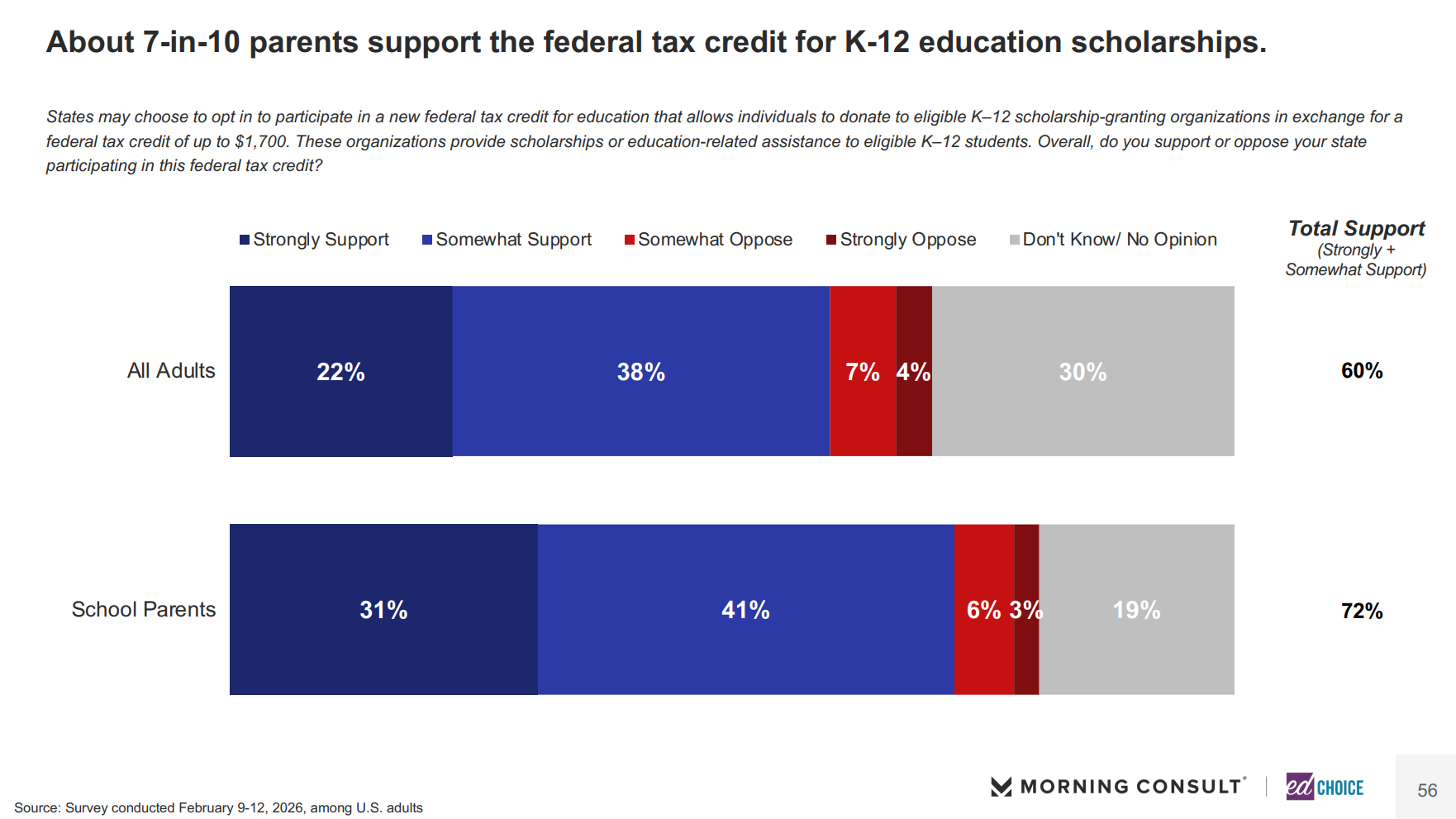
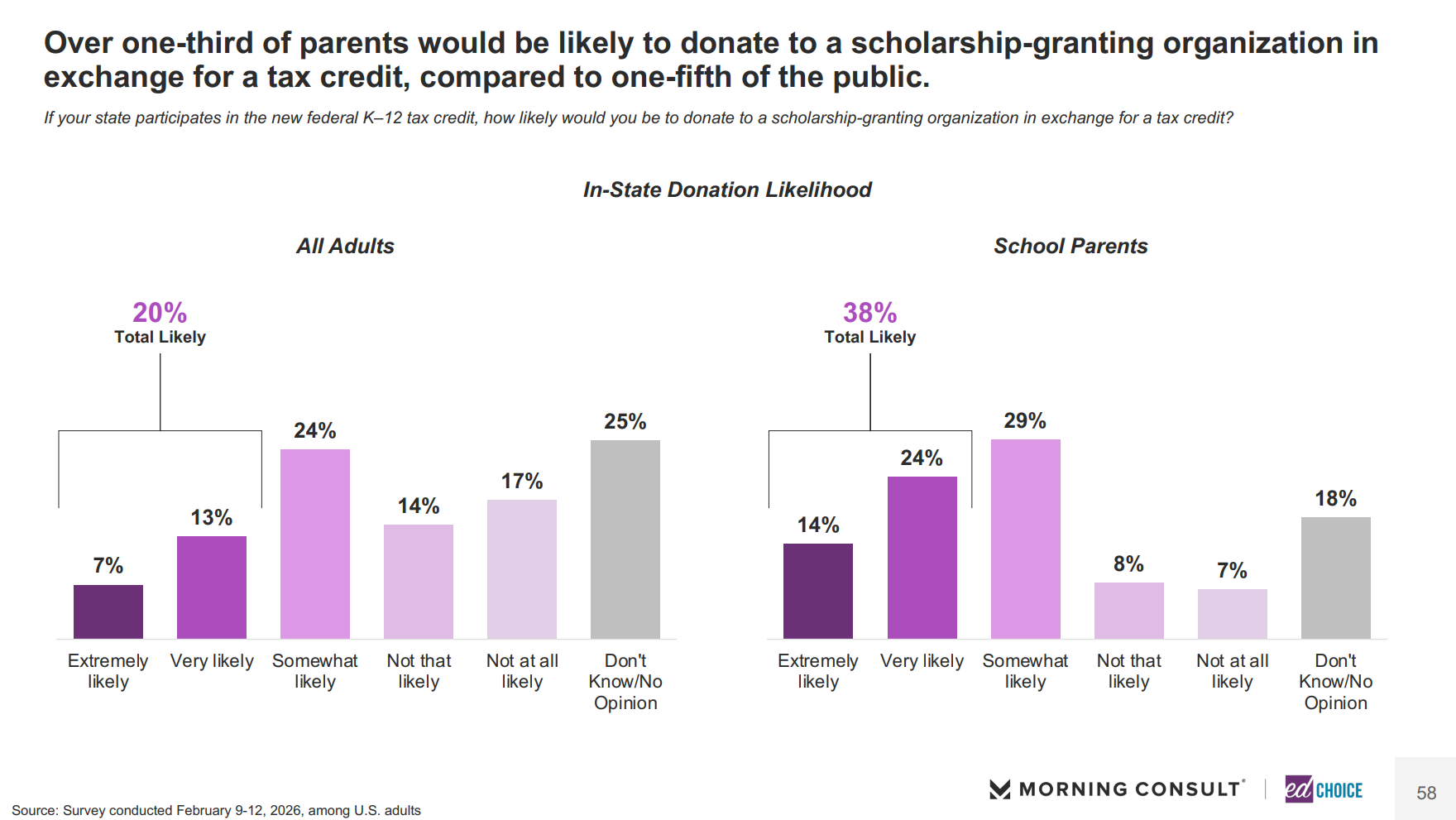
On top of the strong support levels, a considerable number of respondents indicate they personally want to participate. Thirty-eight percent of parents and 20% of all adults say they’re very or extremely likely to donate to a scholarship-granting organization in exchange for a tax credit, supposing that their state opts in to the program.
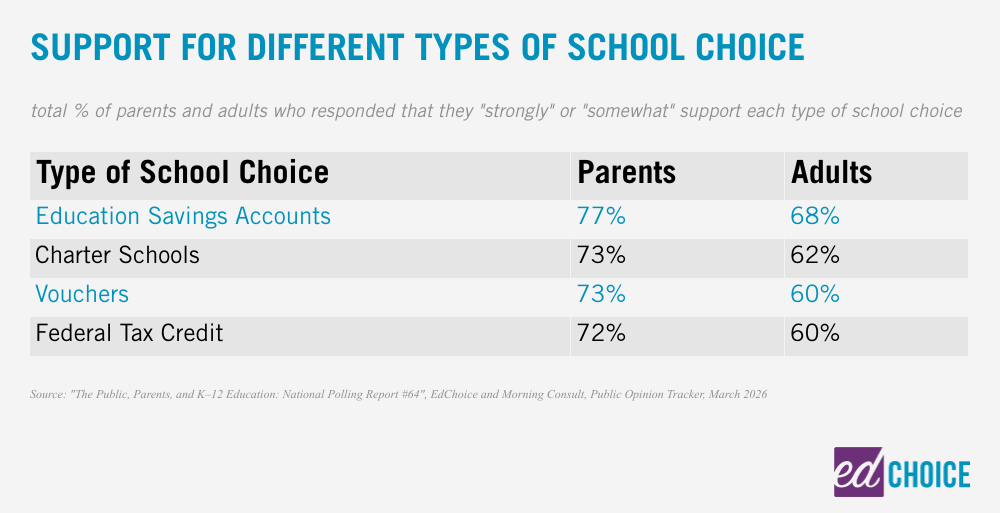
Comparing the federal tax credit to other types of school choice, support levels are strikingly similar in the month of February. Support for vouchers and charter schools clocks in at nearly identical levels, while education savings accounts (ESAs) remain predictably slightly more popular.
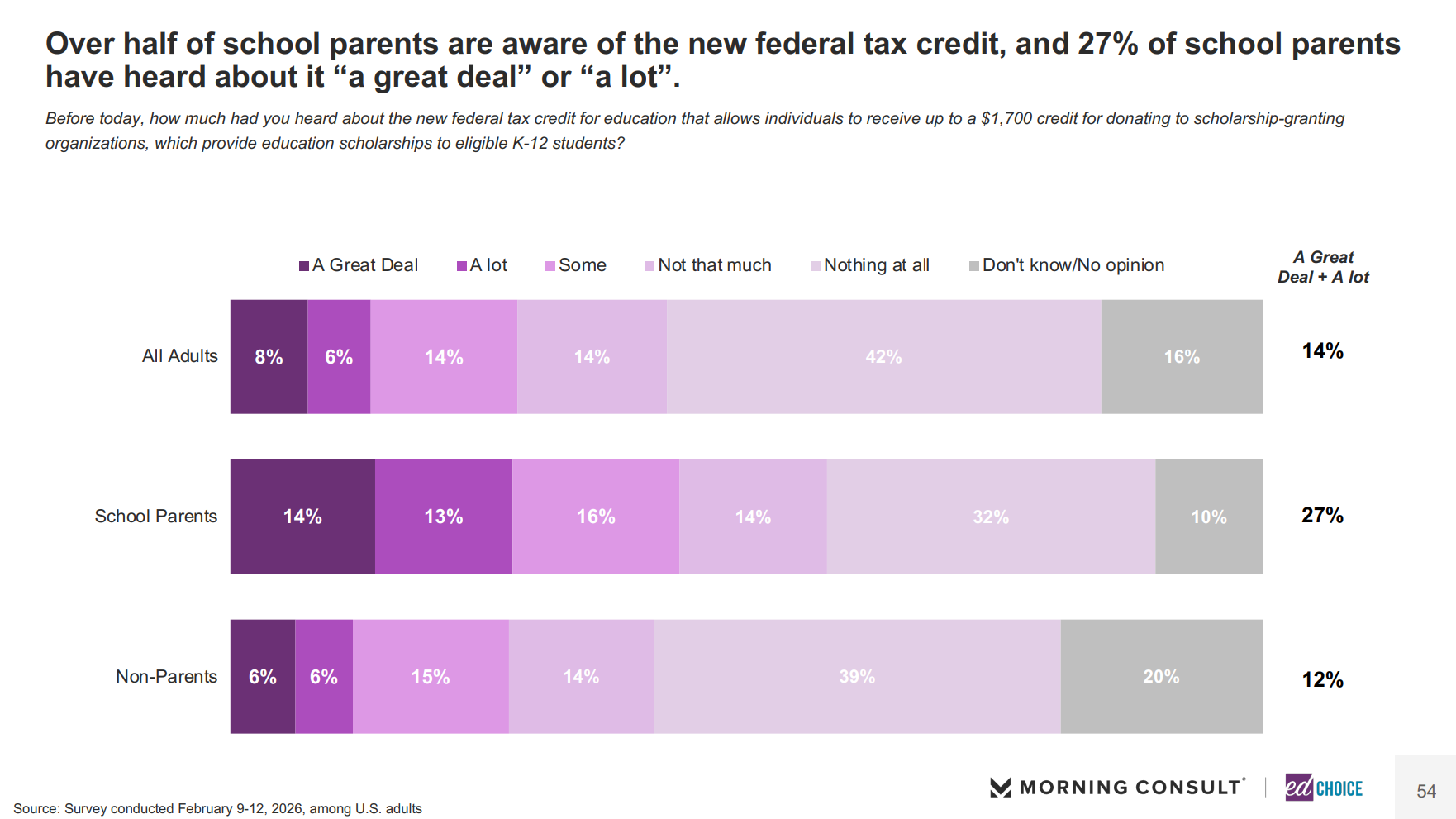
That said, public awareness of the new federal tax credit lags behind support for the idea. We asked respondents to rate how much they’d heard about the tax credit before we asked them about it in the survey. Only 14% of adults and 27% of school parents describe hearing a lot about it. In fact, the plurality answer that they’ve heard nothing about a federal tax credit for education—that’s 42% of adults and 32% of parents.
Of course, there’s still time before the federal tax credit launches—time for people to learn about their options, and for participating states to inform their residents. It’s always good to keep in mind, however, that a successful school choice program needs to make potential participants aware of the choices available to them.
If you have a choice research-related question, you can send it to informedchoice1996@gmail.com and you might see it answered in a future Informed Choice post.
 | A guest post by
|